This project focuses on creating book jacket designs for three of Osamu Dazai’s renowned works: “No Longer Human,” “The Setting Sun,” and “Return to Tsugaru.”

Project Overview
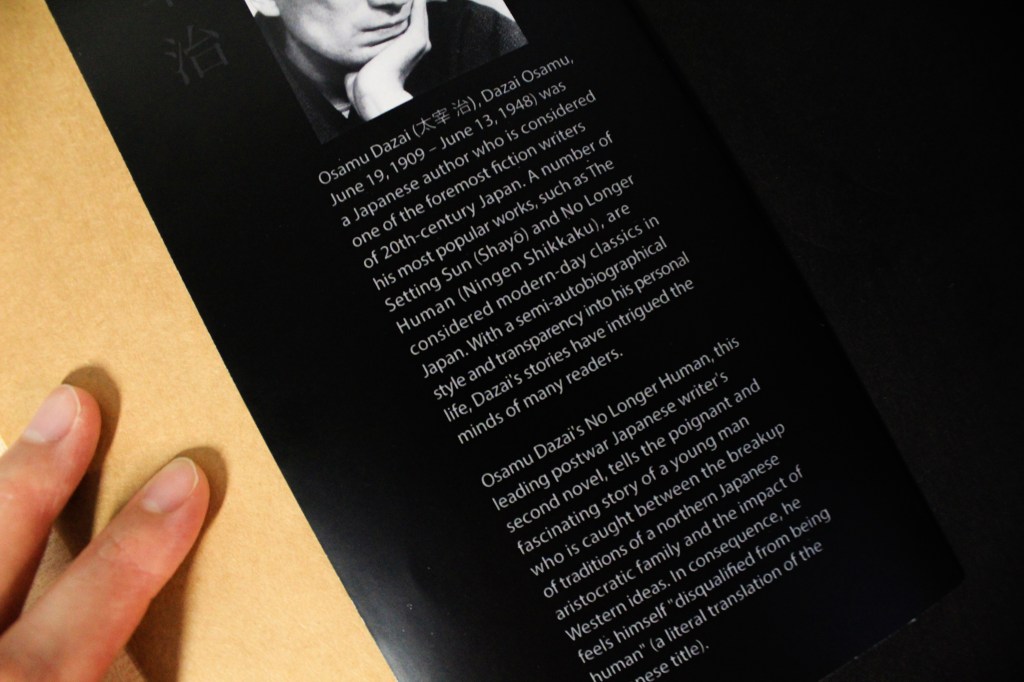
About the author: Dazai Osamu, a celebrated Japanese author, is known for his profound influence on 20th-century Japanese literature, using exquisite language to convey deep, heartfelt emotions.
These designs aim to encapsulate the essence of Dazai’s masterpieces, reflecting the author’s unique narrative voice and the emotional depth of his stories, which have made him a beloved figure in literature and a personal favorite author of me,

“No Longer Human” Is about a man called Yozo feeling profoundly detached from society, who conveys his life’s struggles in a series of introspective notes. His story reveals a deep sense of alienation and an ongoing battle with his inner demons, underscoring themes of identity, isolation, and the difficulty of genuine human connection.
The typography on the book jacket employs dispersed and fragmented lettering to symbolize the protagonist’s disconnection from society and his own fragmented identity, mirroring the central themes of alienation and existential despair in Dazai’s “No Longer Human.”

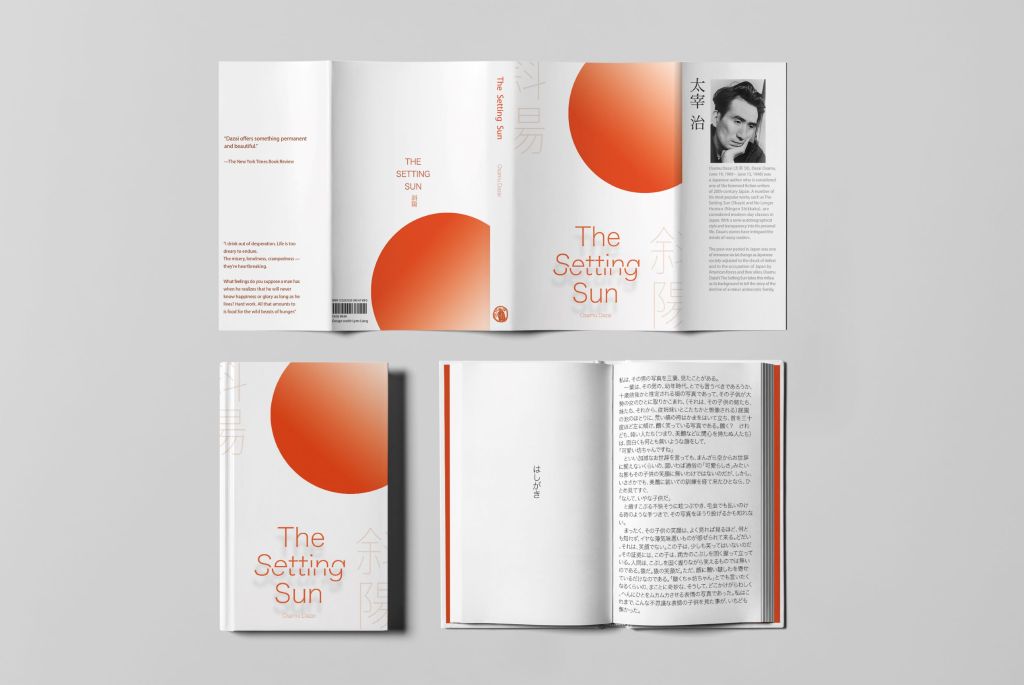
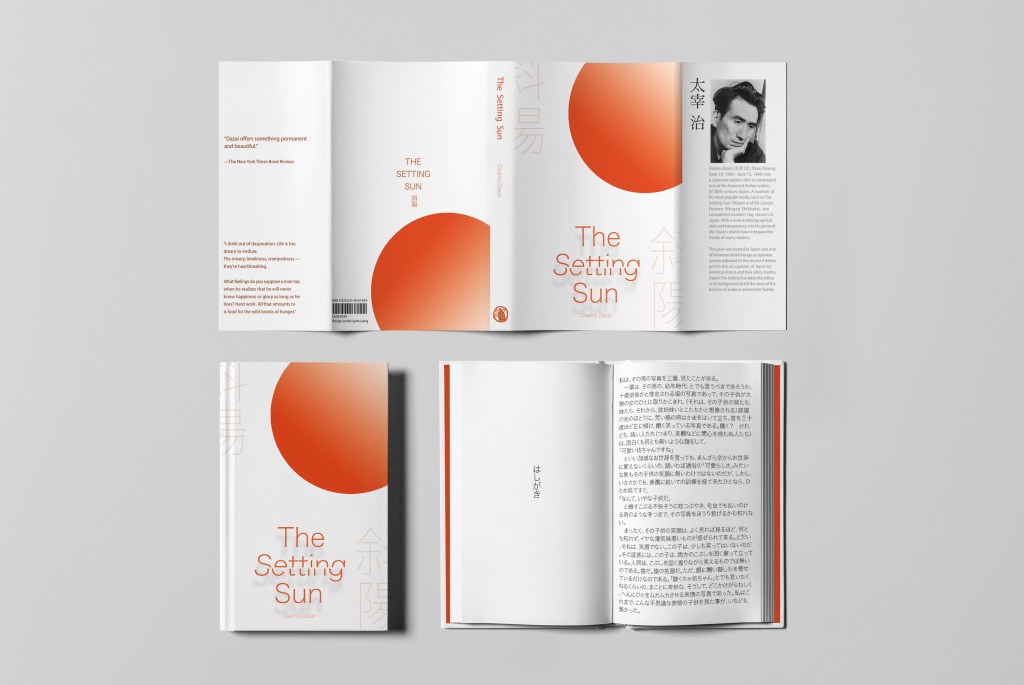
“The Setting Sun” depicts the post-WWII decline of a noble Japanese family, focusing on Kazuko and her brother Naoji as they navigate their fall from grace. Their personal struggles against a backdrop of societal change explore themes of loss, adaptation, and the search for new values in a changing Japan.
The design for “The Setting Sun” utilizes a fading orange-red color that evokes the imagery of a setting sun, symbolizing the decline of the Japanese aristocracy as portrayed in the book. The shadow behind the text may represent the looming darkness and uncertainty that the characters face as their traditional way of life disappears, much like the sun’s light fades into the shadow of night.

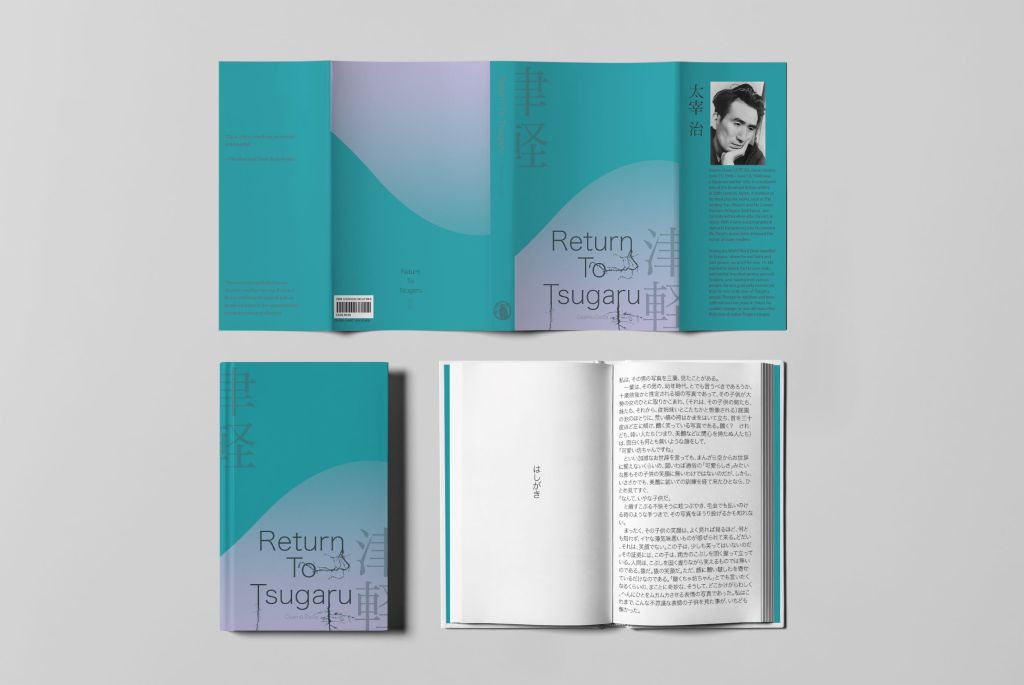
“Return to Tsugaru” is Dazai’s reflective travelogue, revisiting his northern Japanese roots. Through a blend of personal memories and cultural observations, Dazai offers an introspective look at how his homeland shaped his identity and literary voice, presenting a poignant exploration of the interplay between place and self.
The design for “Return to Tsugaru” uses roots, which can symbolize the deep, nostalgic connection to one’s origins and the fundamental aspects of identity that stem from our personal history, echoing Dazai’s introspective journey to his homeland and his contemplation on how his past has shaped him. The cool, gradient background may suggest the merging of past and present, much like the changing seasons in Tsugaru, which Dazai recounts with a sense of longing.




 Lynn Liang